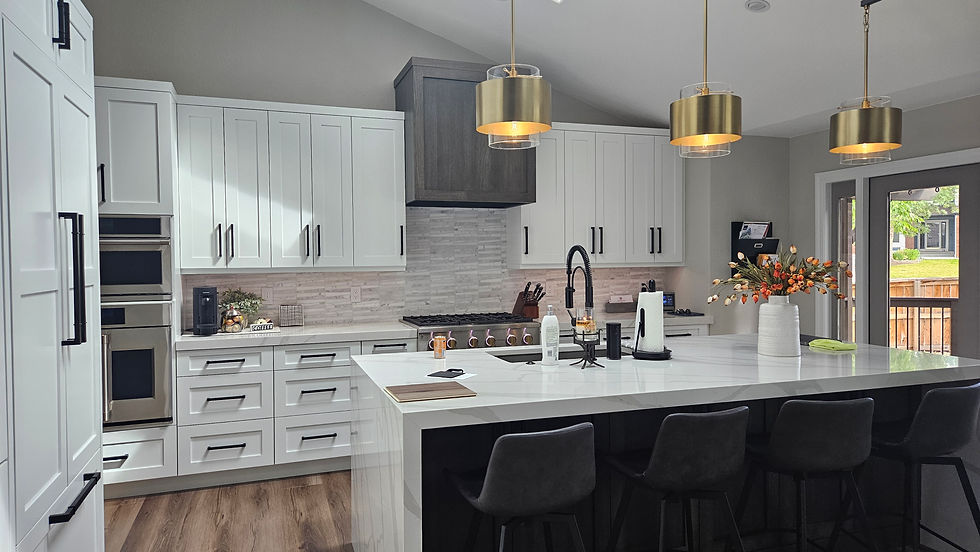
True Luxury Is Comfort: A Sustainable Approach to Homes Designed for the Long Term
Updated: Aug 24
Luxury in residential design is often associated with size, finishes, or visual impact. But in daily life, those things fade quickly. What remains is how a home feels to live in.
Is it calm and quiet?Does it hold warmth in winter and stay cool in summer?Does it support your routines without friction?
This is where comfort becomes the truest form of luxury, and where sustainable home design begins.
Comfort as a Measure of Quality
A comfortable home doesn’t demand attention. It works quietly in the background, maintaining stable temperatures, good indoor air quality, and spaces that are intuitive to move through.
When comfort is designed into a home, energy use drops naturally. There’s less reliance on mechanical systems, fewer quick fixes, and less strain on the building over time. Comfort becomes a measurable outcome of good design, not an added feature.
This is why I see comfort as a form of luxury, one rooted in performance, not excess.
Sustainable Home Design Without the Buzzwords
Sustainability is often discussed in terms of products or certifications, but at its core, it’s about longevity.
A sustainable home is one that:
Uses energy efficiently without constant adjustment
Is durable and well-detailed
Ages gracefully instead of needing frequent renovation
Continues to support the people living in it as their needs change
Homes that are uncomfortable, inefficient, or inflexible tend to be remodeled repeatedly. That cycle consumes more resources than designing the home well from the start.
True sustainability is embedded in the structure of the home, not layered on afterward.
Passive House Principles in Service of Comfort

As a Certified Passive House Designer, I use Passive House principles as a design framework rather than a label.
By focusing on insulation continuity, airtight construction, and high-performance windows, these principles reduce energy demand while improving everyday experience. The home feels quieter, more stable, and more predictable throughout the year.
When applied thoughtfully, this approach doesn’t feel technical or restrictive. Instead, it allows the architecture to support comfort quietly, without drawing attention to how it’s doing so.
Renovation as a Luxury, and a Sustainable Choice
In many cases, the most sustainable and luxurious choice is to improve what already exists.
Renovating an existing home preserves embodied energy, minimizes waste, and allows homeowners to stay connected to their neighborhoods and routines. Strategic upgrades such as improving thermal performance, reworking circulation, or increasing daylight can transform how a home feels without increasing its footprint.
Luxury, in this sense, isn't about starting over. It's about making a home work better for the life being lived inside it.
Designing for the Future and Aging-in-Place
Comfort becomes even more valuable over time.
Homes designed with future needs in mind, often referred to as aging-in-place design, are more adaptable, safer, and less likely to require disruptive renovations later. Clear circulation, main-level living options, durable materials, and flexible layouts all contribute to a home that continues to feel comfortable as life changes.
Designing for the future is not about limiting possibility. It's about creating homes that remain supportive, functional, and dignified for decades.
Comfort as Stewardship
At its core, sustainability is about stewardship of energy, materials, and human well-being.
A home that is comfortable, adaptable, and durable uses fewer resources over its lifetime and offers a higher quality of everyday living. That is the quiet luxury I design for.
True luxury isn't excess. True luxury is comfort, designed to last.
Thoughtful projects start with clarity and a clear process. You can learn more about how I work with homeowners here. If you would like to schedule a consultation you can do that here.
—Marissa Webb, CPHD, CAPS, LEED AP
marissa webb architecture + design